
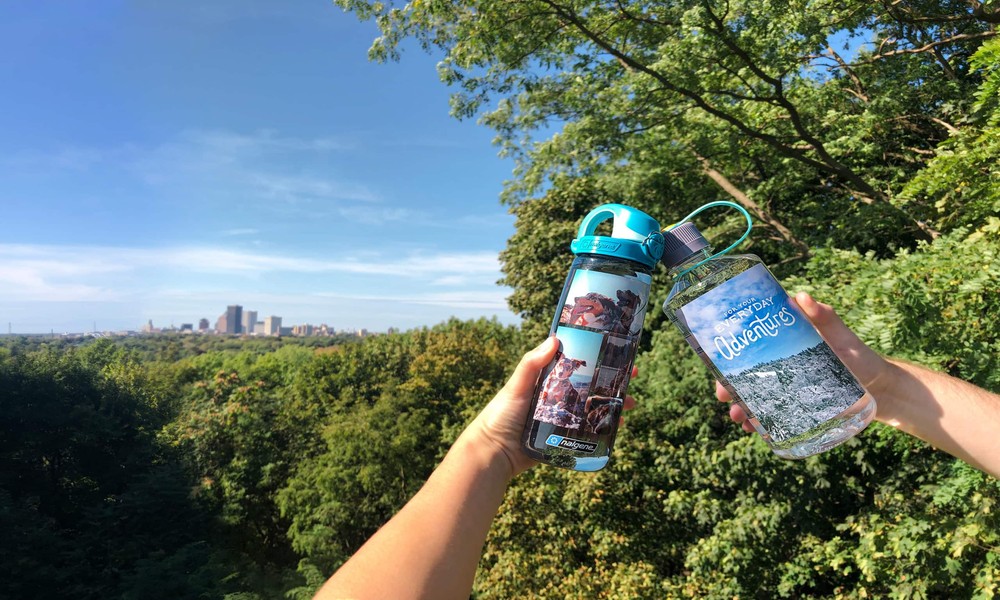

Can one bottle work everywhere?
Carrying separate vessels for indoor and outdoor use adds unnecessary bulk and cost to what is a single daily requirement. A custom Nalgene bottle handles both contexts without adjustment. The wide mouth, durable body, and leak-resistant seal that holds up on a trail perform with equal reliability at a desk or during a gym session. Indoor environments offer controlled conditions where the bottle sits on a surface between uses. Outdoor settings introduce movement, temperature variation, and unpredictable refill access. Most people move between both within a single day, which makes the case for one vessel that covers the full range without specialising in either direction. A bottle that requires swapping between settings is one that eventually gets left behind in one of them. Consistent daily hydration across varied environments needs a format that removes that decision entirely from the routine.
Does bottle material affect indoor use?
Indoor use is often treated as low-demand, but material quality still determines day-to-day performance in ways that add up over time. A surface that absorbs previous liquid content transfers odour and taste into the next fill, which discourages consistent use gradually rather than immediately.
Weight distribution matters differently indoors than outdoors. A bottle lifted repeatedly from a desk across an eight-hour workday needs to feel proportionate in hand rather than optimised purely for trail carry. Cleaning ease is equally relevant; a wide mouth that allows full interior access removes the residue that narrower vessels accumulate in areas a standard rinse never reaches properly.
Outdoor performance under pressure
Outdoor routines expose a bottle to conditions that controlled indoor environments never replicate. The vessel gets dropped, packed under pressure, exposed to temperature shifts, and filled from sources that vary considerably in flow and cleanliness.
- Wide-mouth advantage – A wide opening fills faster from natural sources, taps, or dispensers during activity and allows thorough cleaning when only a brush and soap are available away from home.
- Seal reliability outdoors – Lid integrity under pack pressure determines whether horizontal storage in a bag remains leak-free. A seal that holds upright but fails on its side is a reliability gap that outdoor use quickly reveals.
- Temperature handling – Exterior surfaces that resist heat transfer stay comfortable to hold during warm-weather activity without an additional insulating sleeve as a workaround.
- Refill frequency outdoors – Larger capacity formats reduce stop frequency on routes where water access is spaced across long intervals, which matters considerably during extended outdoor activity.
Routines shape bottle choice
Routine type shapes, which bottle characteristics see the most practical use. Desk-based work, gym sessions, and short commutes place weight on taste neutrality, proportionate sizing, and cleaning ease. Outdoor-heavy routines prioritise capacity, seal durability, and material resilience across variable conditions.
Where both overlap, as they do for most people whose days shift between settings, the vessel needs to perform across that full range. A bottle that excels outdoors but feels impractical at a desk gets left behind when the indoor portion of the day begins. One that suits the office but cannot handle trail conditions gets swapped before the weekend. Neither outcome supports consistent daily use. Rotating across the week requires neither over-engineering nor underperforming. By maintaining that balance, a bottle is genuinely useful across many daily environments without friction.
